Rowen's scans
Tumor & MRI Progress
Understanding Rowen's brain tumor and tracking how it responds to treatment, one scan at a time.
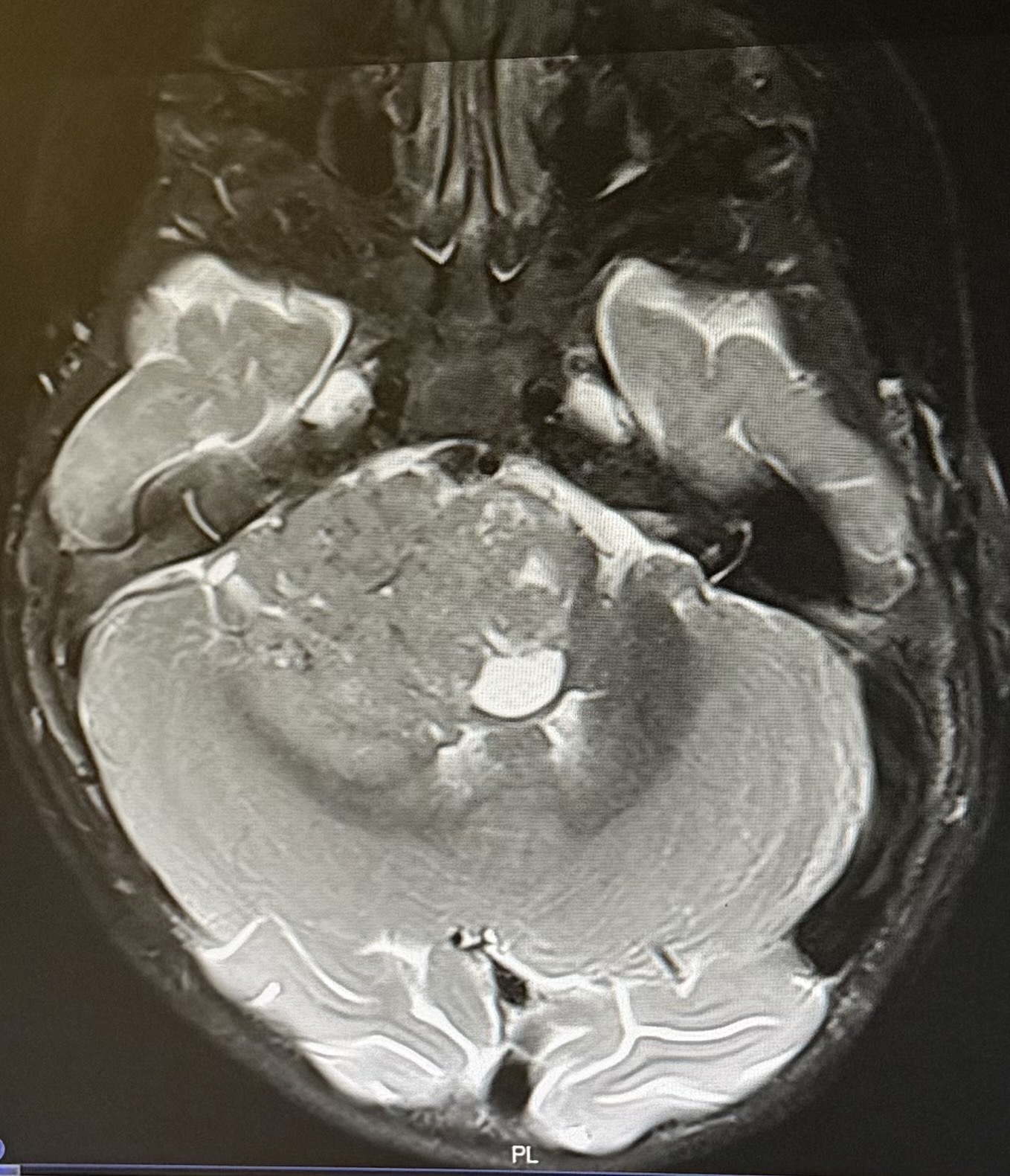
September 14, 2026
Our Starting Point: Before Treatment
On September 14, 2026, Rowen underwent his first brain and spine MRI at Seattle Children's Hospital. Doctors discovered a large tumor in the lower right portion of his brain involving the brainstem and cerebellum. Imaging strongly suggested a rare, aggressive brain cancer called ATRT, which was later confirmed through pathology.
Original Tumor Measurements
4.0 × 4.7 × 4.2 cm
Approximately 1.6 × 1.9 × 1.7 inches
What the MRI Revealed
Location
Lower right side of the brain, extending into the brainstem and cerebellum.
Brainstem Pressure
The tumor was pushing Rowen's brainstem toward the left.
Tumor Composition
Predominantly solid, densely cellular tumor with small fluid-filled cysts.
Fluid Flow
Mild compression of the fourth ventricle, but no hydrocephalus (abnormal fluid buildup).
Other Brain Tumors
No separate metastatic lesions identified in the brain.
Spine Findings
One questionable spot at the C6 level of the spine, which could represent a blood vessel or tumor spread. The initial MRI could not confirm which.
Cancer Type
ATRT (atypical teratoid/rhabdoid tumor), subsequently confirmed by pathology.
Molecular Type
ATRT-TYR, one of the three molecular subtypes of ATRT, identified through pathology testing.
Understanding the Tumor's Location
The tumor touches parts of the brain that do very important everyday jobs. That's why removing it is especially delicate — surgeons must protect the healthy tissue around it, because damage could affect critical functions.
Brainstem
Controls vital functions such as breathing, swallowing, and important nerve pathways for movement.
Cerebellum
Helps coordinate movement, balance, and posture.
Cerebellopontine Angle
Contains nerves involved in hearing, balance, and facial movement.
MRI Comparison & Treatment Progress
Each new scan is added here and compared with where we started on September 14.
Scan results will appear here.
What We're Watching For
- Tumor shrinkage or reduced tumor activity
- Less pressure on the brainstem
- Improved flow of cerebrospinal fluid
- No new tumors or areas of spread
- Continued improvement in Rowen's neurological symptoms
"Every scan helps us better understand how Rowen's cancer is responding to treatment. While we hope to see the tumor shrink, his doctors consider many factors when evaluating his progress."
This page shares Rowen's medical journey in everyday language, based on information from his care team and medical reports. Images may be illustrative, and interpretations are shared for educational purposes. His doctors determine treatment decisions and evaluate his response to therapy.